
WHAT FAMESICK GETS
the mysterious good that can come from feeling bad

I have been sitting after reading this book, trying to think about what I want to say. The media cycle has kind of passed (and I just saw that Ms. Dunham’s 40th was yesterday ?!), which feels - to me - like perfect timing.
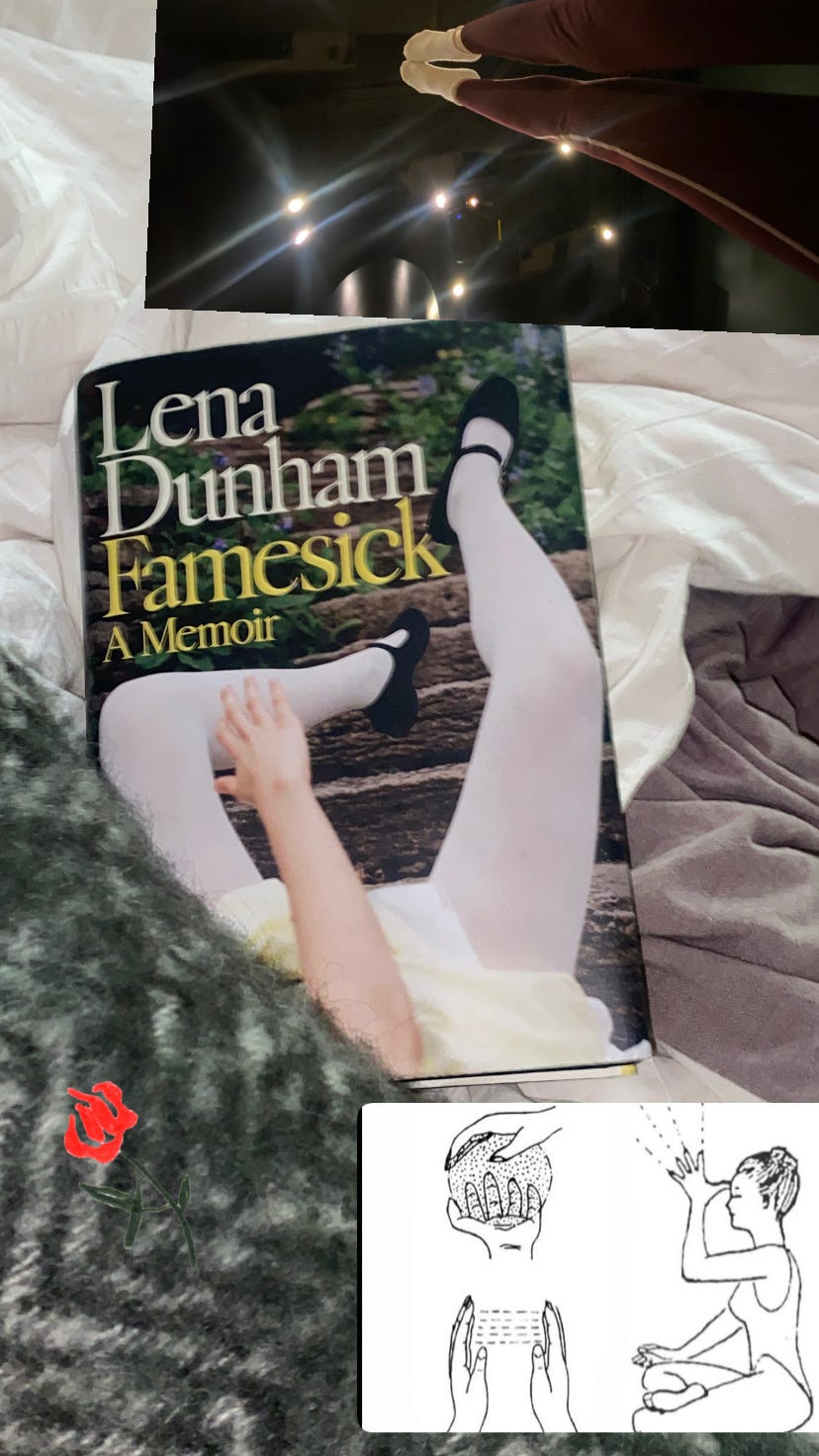
Famesick is so fun to read. She is so good at prose, the chapters go easy and fast and funny. She shares more than I thought she might. But I am interested in this book because (amidst the dishiness) Lena Dunham makes a connection that we do not often see, or haven’t in some time — and perhaps never by a popular figure in media. She parallels illness with fame.
The more famous, visible, scrutinized she gets, the more her body becomes an intolerable place to exist. She has made a great point in interviews: that these two conditions (sickness, fame) are ones that are charged and connected. Attractive/repellant. Uncontrollable, wild states of being. Ones, too, that no one really likes to talk about.
She writes: “I always struggled physically, but my symptoms, which seemed diffuse, were never collated into a diagnosis, especially in a world where the pain of girls and women is dismissed. Stress has a measurable effect on autoimmune and inflammatory conditions, and worsened my physical symptoms, so ironically making Girls— arguably the best thing that had ever happened to me, but also the hardest I had ever worked — only served to make me sicker. But by this point, my responsibilities made taking the time to get well seemingly impossible.”
In the book, her sickness wrecks her — but it also seems to save her life, redirecting her path into a quieter, slower, simpler one.
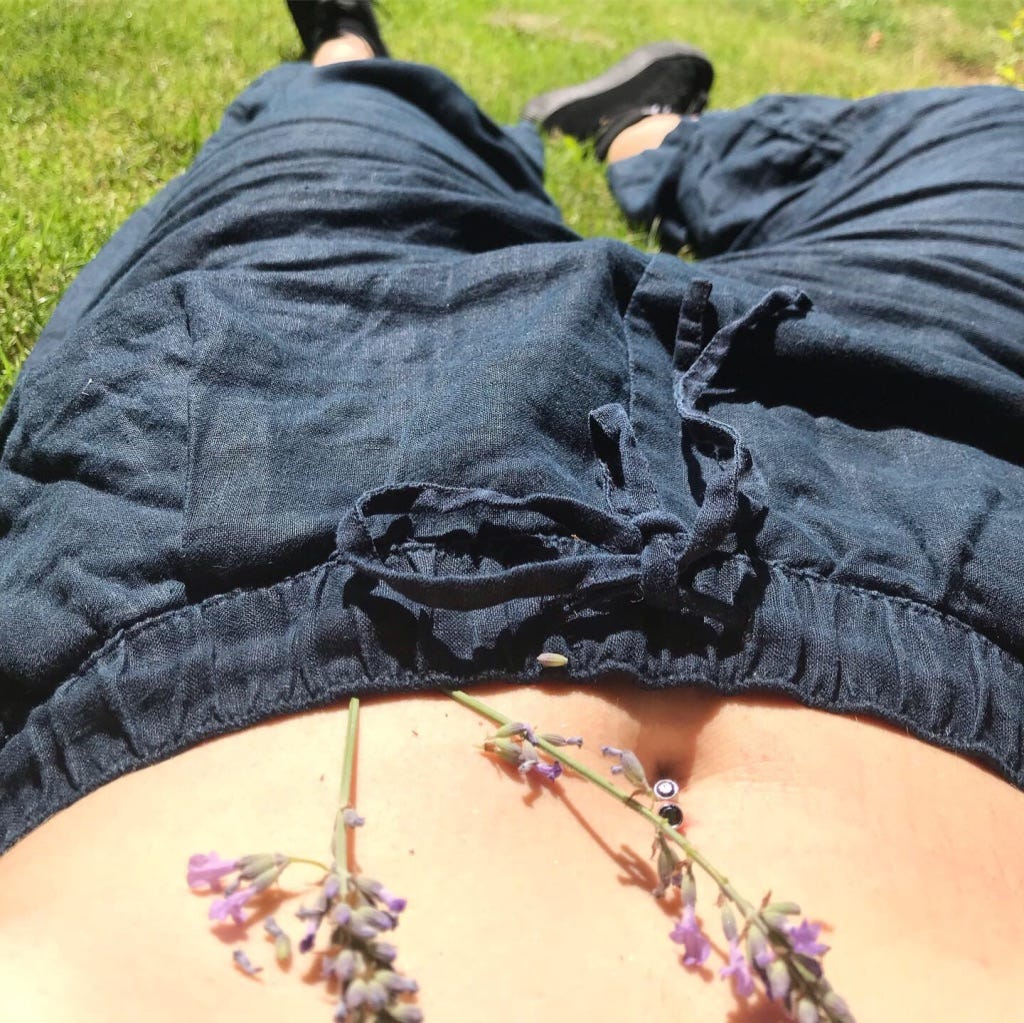
When I was in my first year at college, my stomach stopped working. I am serious, and there’s kind of no other way to say it. I had felt some strange aches in the leading up to school, vaguely ill as I worked at my summer camp. Some bloating and heartburn as I packed food for kids’ camping trips. I had always been healthy and these new sensations were strange and dissonant; I would get tired and lie in the dry grass in the sun, my body sinking into the warm earth.
At Kenyon, my freshman year, the burning started. Suddenly, my stomach hurt all the time. It hurt when I ate anything at all. It hurt when I drank water. This burning in my esophagus, this bloating that made me feel pregnant with something. A strange chaos, an embarrassing and profound discomfort that seemed uninterested in abiding by my plans to be a fun and fab first-year. My hands and feet often went cold, my thoughts quickened with the shock that something was very wrong. I was tired before the day began, and the energy drained from my face.
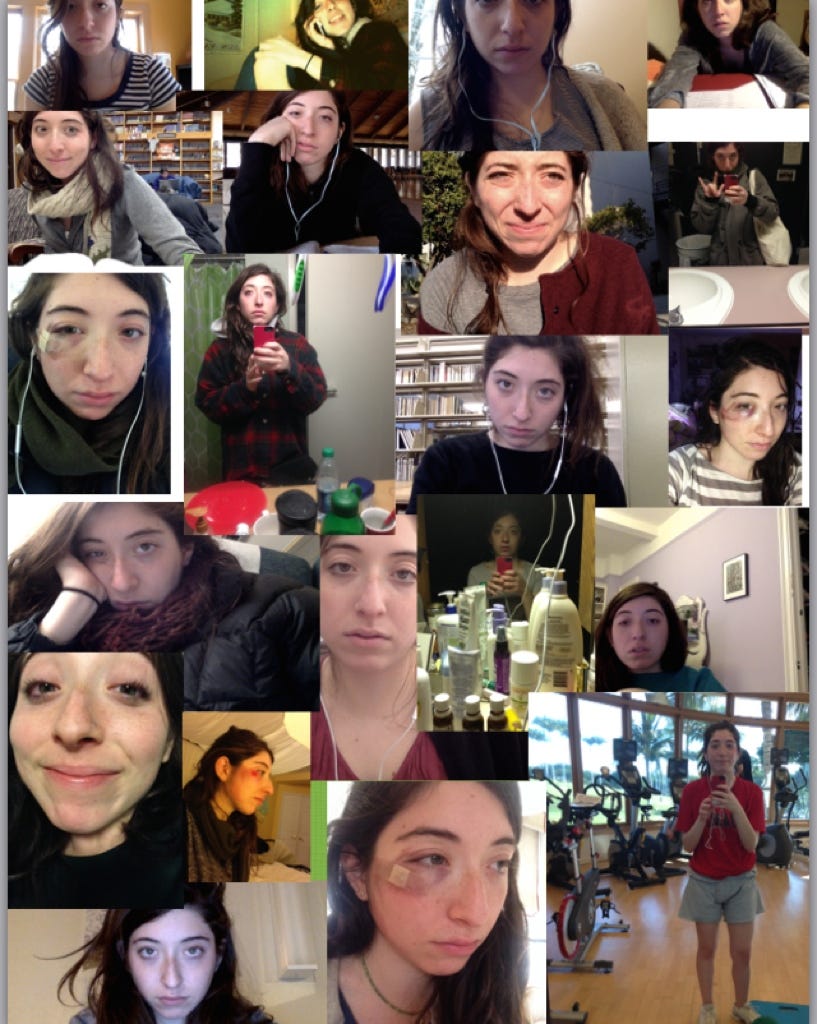
I tried to be normal and eat Dominoes and drink Franzia Moscato and honestly? I likely did those things feverishly, to excess, reveling in the strange nihilism of knowing that if my discomfort wouldn’t subside, at least I could have some fun. Or maybe I was just tired of feeling bad, tuned into the feeling that joy – where I could find it – was some sort of medicine. I made friends (by my side, to this day) and kept up with my classes (hard!) and did all the things that a girl is supposed to do. I also knew something was wrong, and – privately – would often despair.
Of course I went to doctors; sweet Brooke drove me to the gastroenterologist two counties away so that they could do an endoscopy. The anesthesia was strong and my throat was sore coming out of it — I called my dad on the drive home and then, Brooke reminded me, I had already called my dad on the drive home. I went to doctors back in New York, specialists (mostly men…) who said that maybe I was hormonal or tired or should eat less gluten or dairy. I ate icky replacement foods, soy yogurts and snacks that felt avoidant and made nothing easier.
I developed insomnia, lying awake in my tiny dorm room, surrounded by tinctures and remedies and OTC meds, total wastes. The hours stretched long and felt cold.
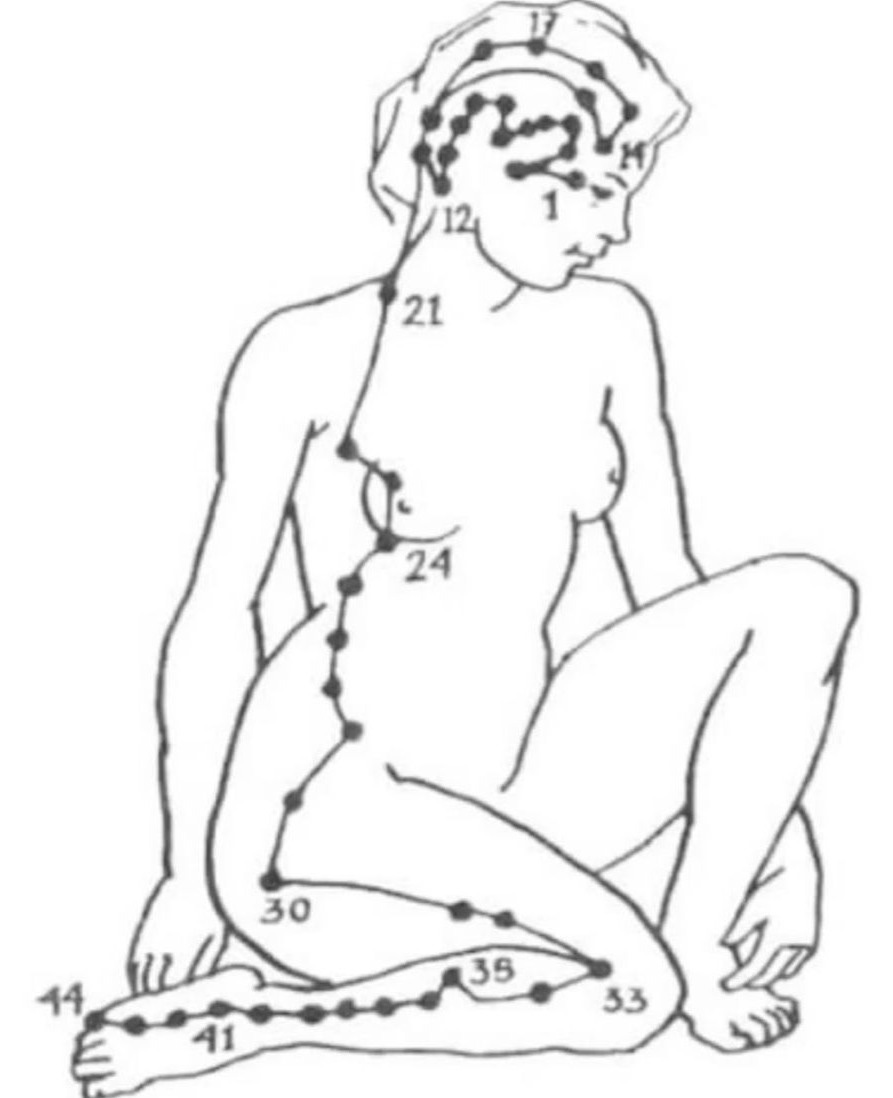
I did not believe in acupuncture, or ‘anything woo-woo’. (Lol!). I was skeptical of any vibe-based specialist, any suggestion that correlated with ‘the holistic’. I already knew nothing would work… so God Bless My Parents for Sending Me To Acupuncture. In our first session, my acupuncturist (still my teacher, 12 years later), felt my hands, checked my pulse, looked at my tongue. “He’s being random!!”, I thought – but didn’t have much energy to muster attitude.
Then, a question that surprised me: how much are you worrying?
“All the time.” I said. “I am always worrying, all the time.”
The needles he put in me, all over my body, made little zings of electricity. Radiant synapses in my feet, my wrists, in between my eyes. In our sessions, I was forced to lie still. I ended up hovering somewhere between sleep and waking – somewhere soft and hazy, somewhere weird and good.
Back in Ohio, I became what I am sure was the only person ever to go to acupuncture in our county. I have wondered, in retrospect, if Knox County Acupuncturist Nicole was in fact a mirage. Nicole was sort of sassy and amazing, first working out of her old Victorian house and then at a strip mall near the Chipotle. I would drive to her and receive acupuncture, lying still in the same way. The walls were thin and I would listen to her chatting on the phone in the other room, while I drifted somewhere. While I rested.
The healing regimen was crazy: 3 different pills, all smelling different. 5 times a day. 3 sets of tinctures, all tasting like different variants of earth-flavored moonshine, 5 times a day. This was exhausting, not just for what it was, but for the new way taking this stuff made me seem. Campuses are panopticons and I felt weird taking all of these things! Embarrassed, somehow delusional. Jangling around from class to class with all my holistic medical accessories. I was so lucky to have access to this care, and felt embarrassed and guilty that I was not self-sufficient, that I was concerning my parents when I was supposed to be a grown-up.
As a kid, I had always been annoyed at the kids who would be injured right in time in gym class. Who would fake sick and go lie down in the nurse’s office, who would say that they got hit hard by something when it had barely seemed to touch them. I worried tremendously that people might feel that way, now, about me.
It became very clear to me that because I looked fine on the outside (bloated and pale, but also freshman year in Ohio vibes), the way that people responded to hearing what was happening to me internally showed me a lot about who they were. The sign that someone could listen with care and trust that I felt the way that I did — that this was real — meant that I could trust them.
The discomfort shifted, not abiding but giving me moments where I could see outside of it, around it. My sweet friends! They picked up my Prilosec for me at the Walmart. Their realness transcended my expectations. Spring came — in Ohio, a major blessing — and I could lie in the sun between classes, reading while campus bloomed. I started taking classes that gave me energy, doing better in them, remembering how much I loved to learn. I began to sleep again. I fell in love. Things changed.
And that was it!
Just kidding lol sorry.
The truth is that this strange sickness has stayed with me in one way or another for the last 12 years. It has morphed and shifted form: into autoimmune indicators and SIBO, inflammation and fatigue. It has flared and retreated. I have fought it, pushed past it, pretended it wasn’t there. I have rebelled against it – especially working in restaurants – drinking and smoking and eating and not sleeping, celebrating in spite of something. I have submitted to it, staying in bed until forcing myself up and out, showing up to dinners and parties pale and tender, bloated and empty.
Sometimes people ask ‘did you ever figure out what it was?’. Haha… no! What I have found is there are many different names for it, and that no part of the body exists separately from the rest. I don’t know what brought it on, but I have learned ways to soothe it when it activates – or to abide with some level of patience when it really is determined to freak it.
And yet today? The only moment that I know exists? I feel well. I woke up feeling well and it’s the afternoon and I am feeling well and hopefully tonight, I will feel well, too. And I will tell you: feeling bad definitely makes feeling well feel BETTER. I am so lucky to be healthy, to have access to care, to have the time and space to take care of myself.
I now am going to say something that might sound fake but it is not: I AM GRATEFUL. !!!
This thing has allowed me to understand a bit about sickness. Its isolation and discomfort, the stagnation while the world keeps moving. It forced me to retire any disordered eating pursuits, because my body was clearly not interested in anything but figuring out how to work well again. And mostly, it got me interested in care. I had not believed in the woo-woo before (lol once more), but this sickness, and the mechanisms that have helped it ease and shift, have powered my interests and my life. It is horrible and was horrible and it also gave me something very important.
So! Dunham’s positing fame as parallel to sickness means that we get to look at them both as not the thing we thought they were. Bad in many ways, good in some – opposite than one might think. Illness, then, is a major character. The libido of the book, the clock setting the pace, and the driver of the story. It’s the entity Lena talks about the most, the co-author on the project.
And — just to say — her ‘being back’ is major. We need to witness women who we have punished, who return to share what they have learned in exile and to remind us that we have kind of forgotten what we did to them in the first place. To see a face again, older and familiar, serves as something of a Rorschach test of what we do to one another. She has changed, and her sickness has changed her.
There are plenty of raw moments in the book, but a big one Dunham talks about is when a shitty doctor seems to have ruptured a cyst. Everyone is shocked, except for her. “Nobody had to tell me it had been ruptured by the exam. I knew that’s what had happened. I had felt it.”
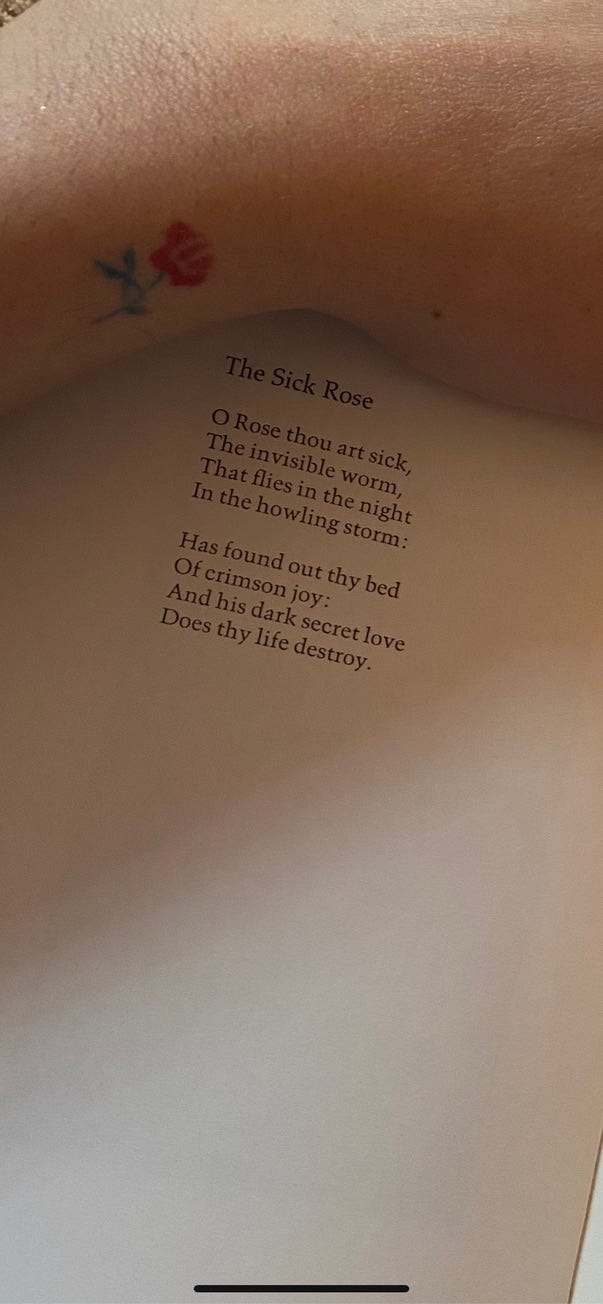
I spent the last two weeks in Marseille, with my dear Kasya, working on our respective projects. Closer to the water, something shifted. Away from the city, my writing got realer. The realer it got, the more I noticed sparks of discomfort, shocks of fear. I began to worry, and my stomach began to hurt.
In between work sessions, moments of catharsis. Jumping in the cold water, going insane at the Euro karaoke bar, dancing in our weird little apartment. Stomping and jumping on the terra cotta floor, which seemed able to hold whatever thumps I gave it.
These little moments! Gianni has told me that I have similar energy, when dancing, to Hannah in Girls. Which did… not feel like a compliment at first. In Marseille before bed, I clicked around Girls episodes (I know them by heart) to find those moments of Lena dancing as Hannah.
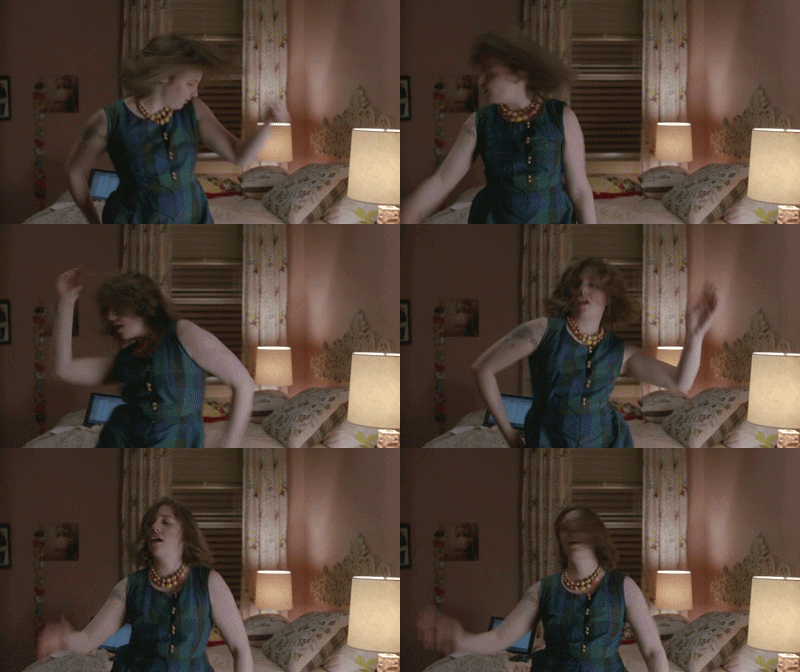
They were so good, actually. Hannah mouthing the words, moving without thinking.
To move without thinking!! To feel well, or better… or something!
This reflection on the major way Lena is back is major!! Eternally grateful to all women who bare the truth of their bodily experience and in the process free us all. Thank you for writing among them ❤️🔥
love this so much. dancing like hannah - not a compliment at first, but it's so for real